Decoded DFC
Decoded the DFC retention and engagement system — a learner-first onboarding experience that bridges initial curiosity and long-term educational commitment.
- Role
- UX Researcher + Product Designer
- Timeframe
- June 2026
- Focus
- Learner Onboarding · Habit Formation · Retention & Engagement
- Platform
- Web
See the problem, insight and design decision in under a minute.
Learners arrived curious and left before the learning began
DFC attracts learners who genuinely want to change something about their skills and their careers. The gap was never interest — it was what happened after signup.
The product asked people to self-navigate a large body of content at exactly the moment they had the least clarity about where to start.
- Working professionals struggled to stay consistent
- No visible pathway from “I signed up” to “I am making progress”
- No visible momentum, so motivation had nothing to hold on to
Mixed-method evidence, not assumptions
The research combined depth interviews, telephone outreach, secondary research and three months of platform analytics so behavioural patterns could be triangulated rather than guessed.
- 50+
learners interviewed in depth
Measured evidence - 150+
telephone responses
Measured evidence - 220+
survey & call responses
Measured evidence - 3 months
of platform analytics reviewed
Measured evidence - 68%
first-week drop-off
Measured evidence - 18%
total conversion rate
Measured evidence
All figures above are research observations measured during discovery — not post-launch outcomes.
Learners need structure, not more content
The steepest drop-off sat inside Getting Started — the exact stage meant to build confidence. People were not rejecting the material; they were losing the thread before the material could matter.
That reframed the brief from “add more value” to “make progress visible, guided and shared”.
- Low-motivation phases needed emotional support, not more choice
- High-pressure phases needed smaller, achievable commitments
- Consistency depended on external accountability, not willpower
From a sharpened How Might We to five concepts
Refined HMW: “How might we help DFC learners stay consistent and emotionally connected during low-motivation and high-pressure phases?”
Crazy 8s, persona work and an impact-vs-effort matrix narrowed a wide concept space down to what could realistically ship.
- Personalized onboarding
- Goal-setting wizard
- Progress tracking
- Accountability groups
- Mentor support
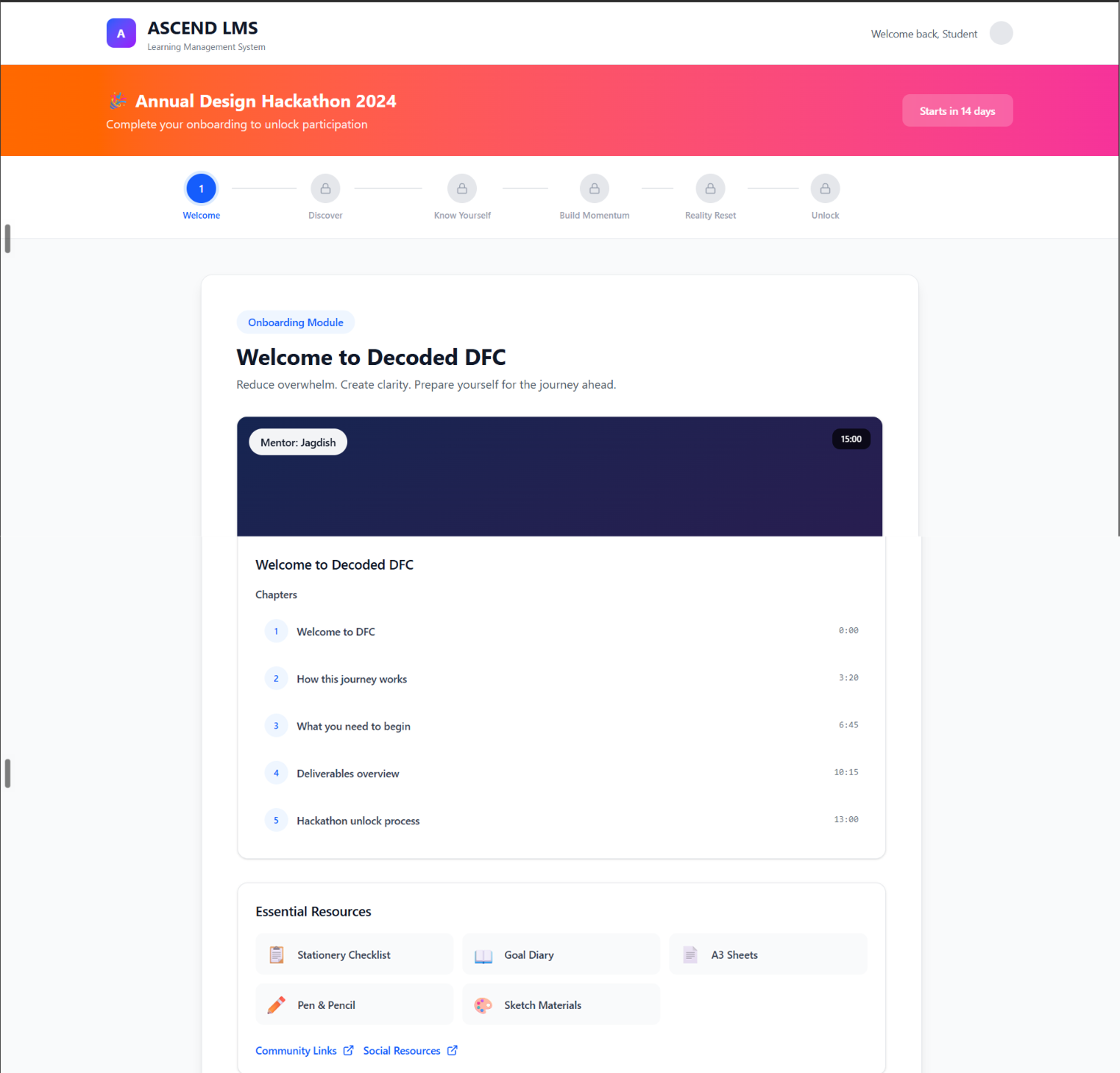
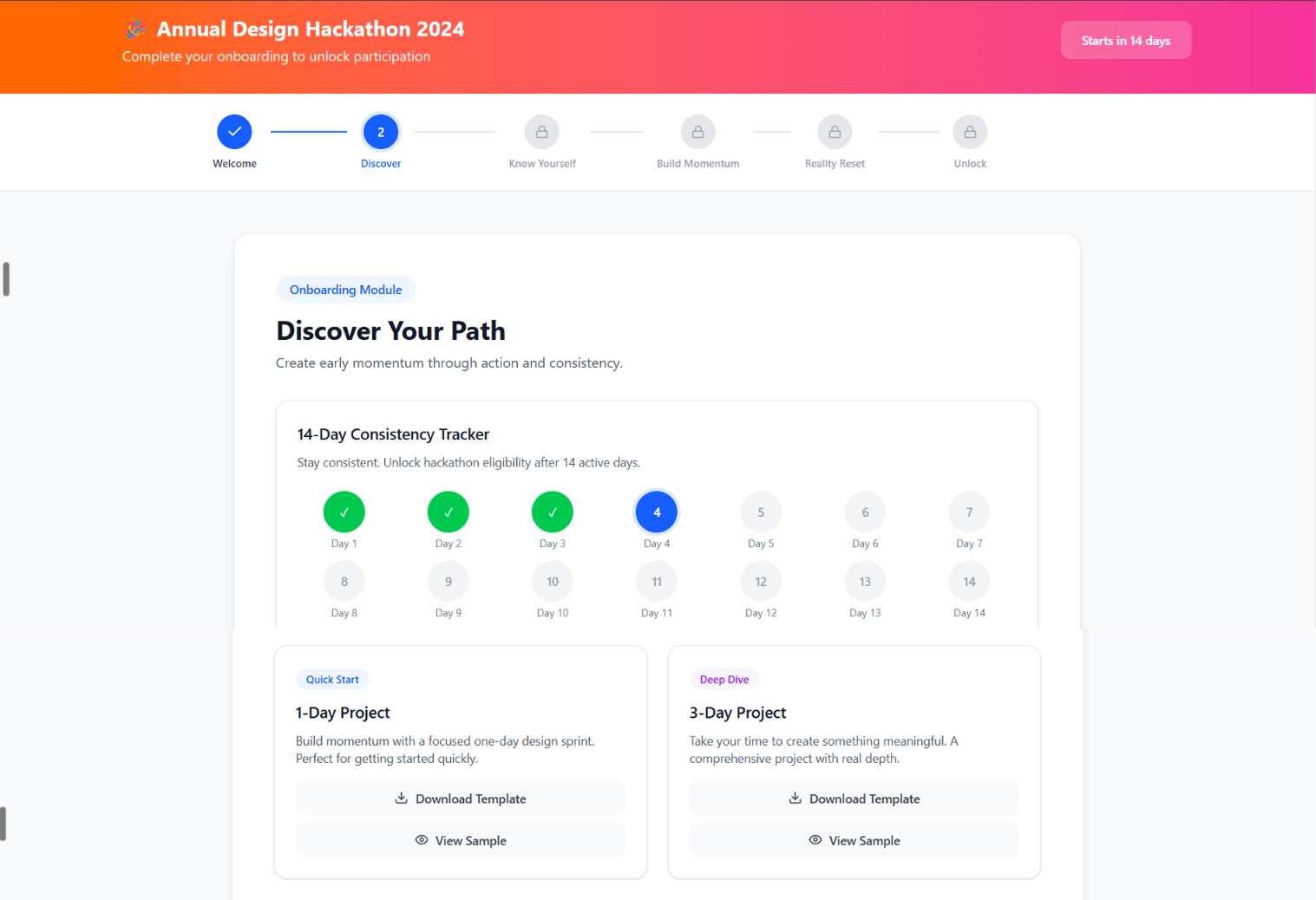
A guided path with visible momentum
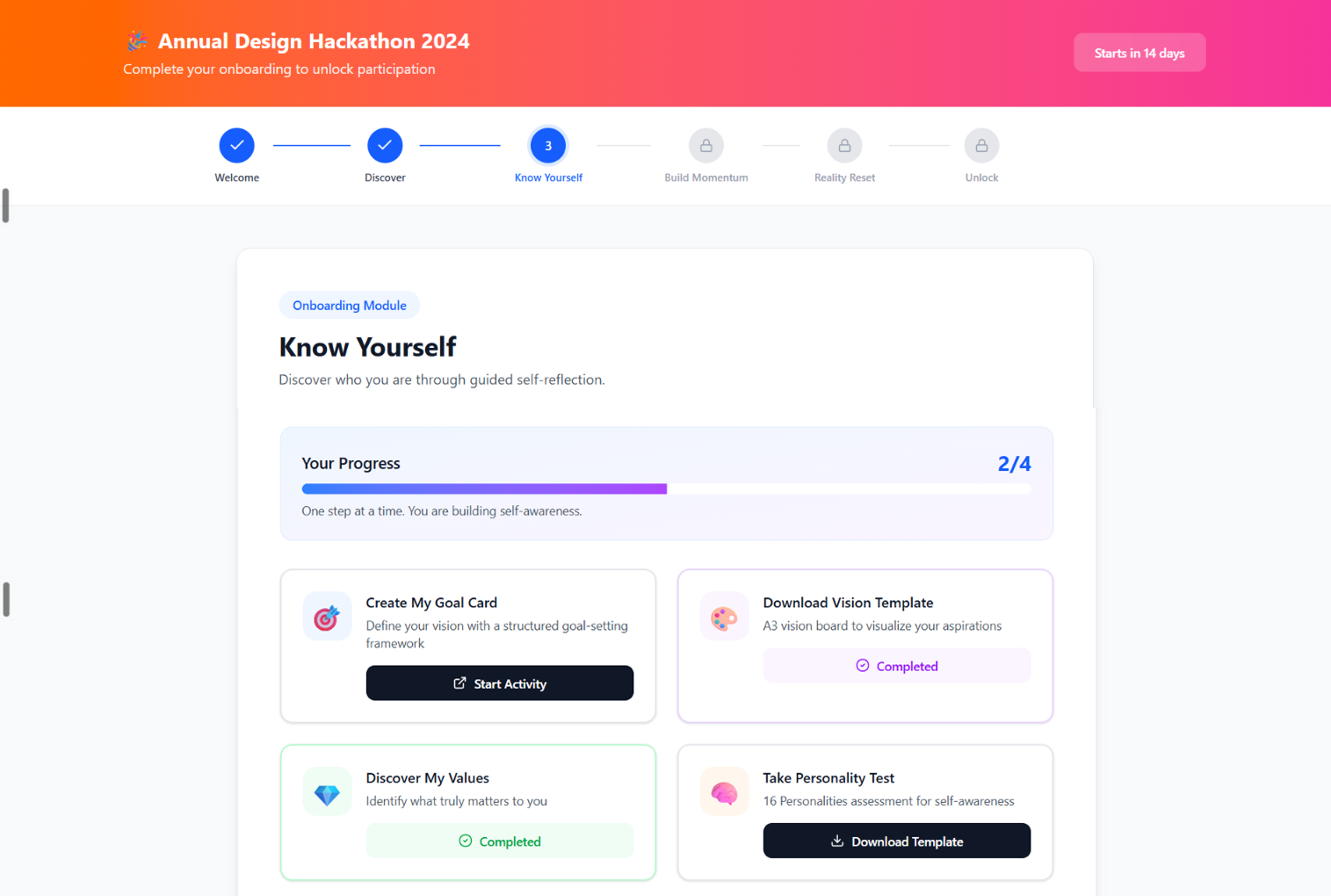
The proposed flow gives every learner an ordered, low-effort first journey instead of an open library.
- Evaluate Your Skills → Know Yourself → Codex → Reality Check
- Goal clarity — one committed outcome instead of many options
- Progress visibility — momentum a learner can see
- Community accountability — progress that is shared, not solitary
- Small wins — celebration at the points people usually quit
What the evidence supports today
The retention system is a designed response to measured behaviour. Discovery metrics are documented above; post-launch performance data is not published here because it has not been measured.
No projected outcome figures are claimed for this project.
Learning succeeds when users are guided, supported and celebrated
Not when they are overwhelmed. The strongest design decisions here were subtractive — fewer choices, clearer sequence, visible proof of progress.
Get the full case study
The detailed version includes the research, decisions and design work behind this project.