LinkedIn Trust & Safety
A conceptual multi-layered verification system that helps job seekers identify trustworthy opportunities and avoid recruitment fraud.
- Role
- UX Researcher + Product Designer (self-initiated concept)
- Timeframe
- Concept project
- Focus
- Trust & Safety · Behavioral Analysis · Design Systems
- Platform
- Web
See the problem, insight and design decision in under a minute.
Job seekers cannot tell a real opportunity from a convincing scam
Recruitment fraud has grown into an everyday risk on professional networks. The people most exposed are the ones with the least leverage — candidates who need the role.
This is a self-initiated concept project. It was never deployed by LinkedIn.
- 40%
rise in job fraud, 2021–2024
Measured evidence
Small, direct, documented
Evidence came from scam artefacts collected in the wild and from talking to people who had encountered them.
- 2
recorded scam interactions
Measured evidence - 11
survey respondents
Measured evidence - 3
personas synthesised
Measured evidence - 6
features proposed
Measured evidence
A sample of this size is directional, not statistically representative — the design decisions treat it as such.
Trust fails at the decision moment, not at the report moment
Reporting tools help after harm. Candidates needed the signal earlier — while reading the post, the company page and the recruiter profile.
Urgency is the scammer's main lever, so the counter-design has to be legible in seconds.
Layered verification instead of one badge
- Verified job seeker profile badge
- Experience approval interface
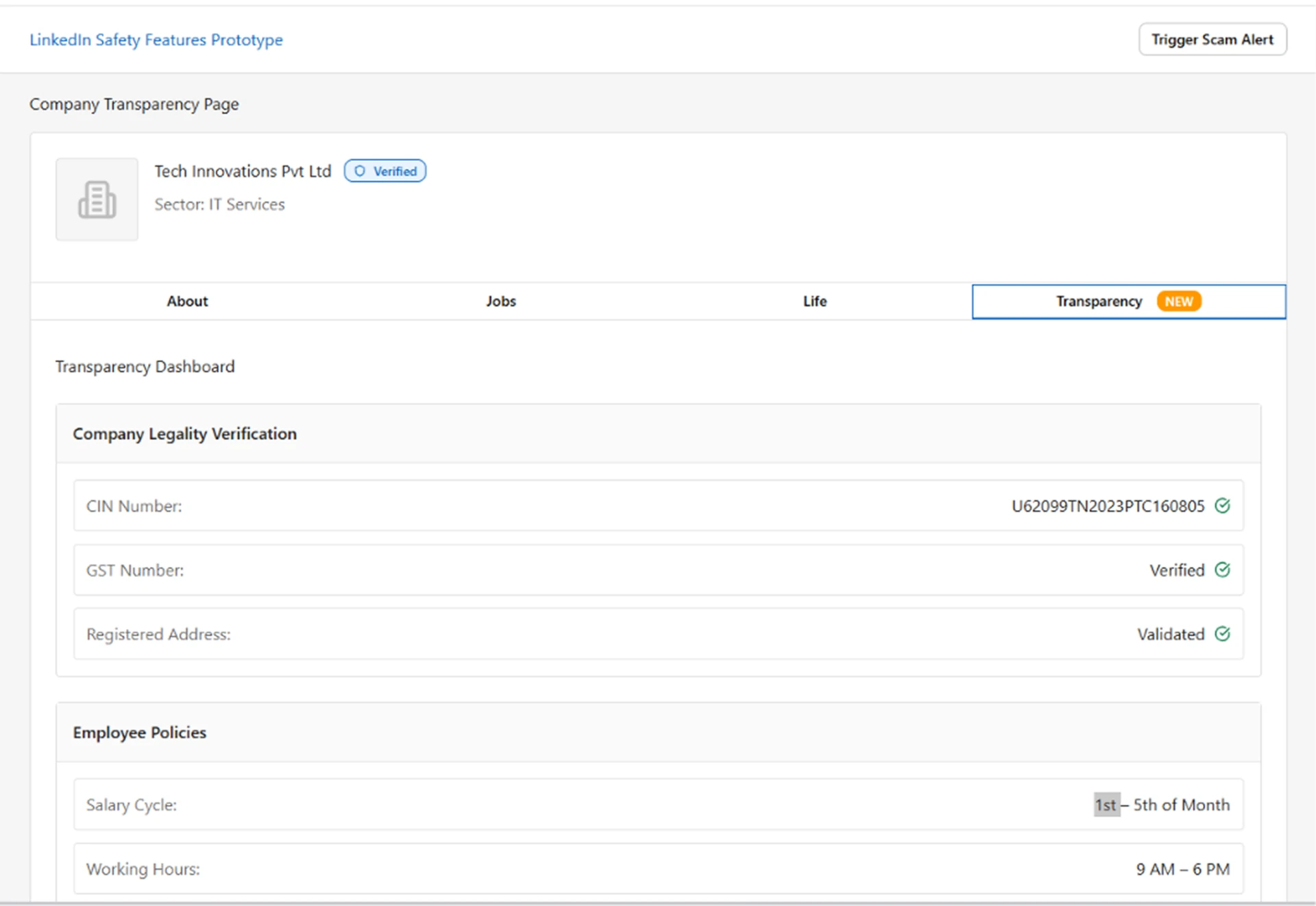
- Verified company page
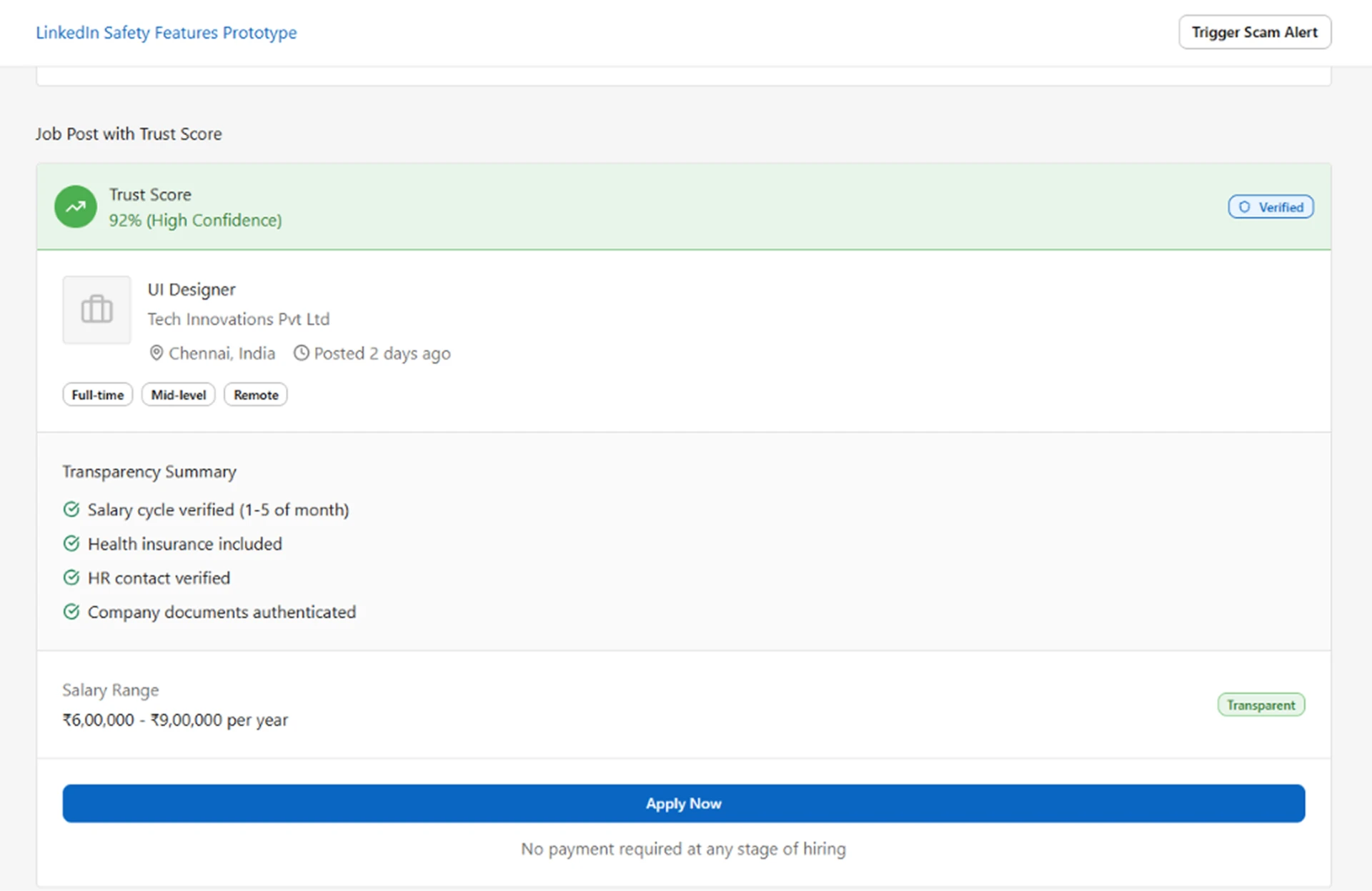
- Job post with a visible trust score
- Scam alert notification
- Scam report form
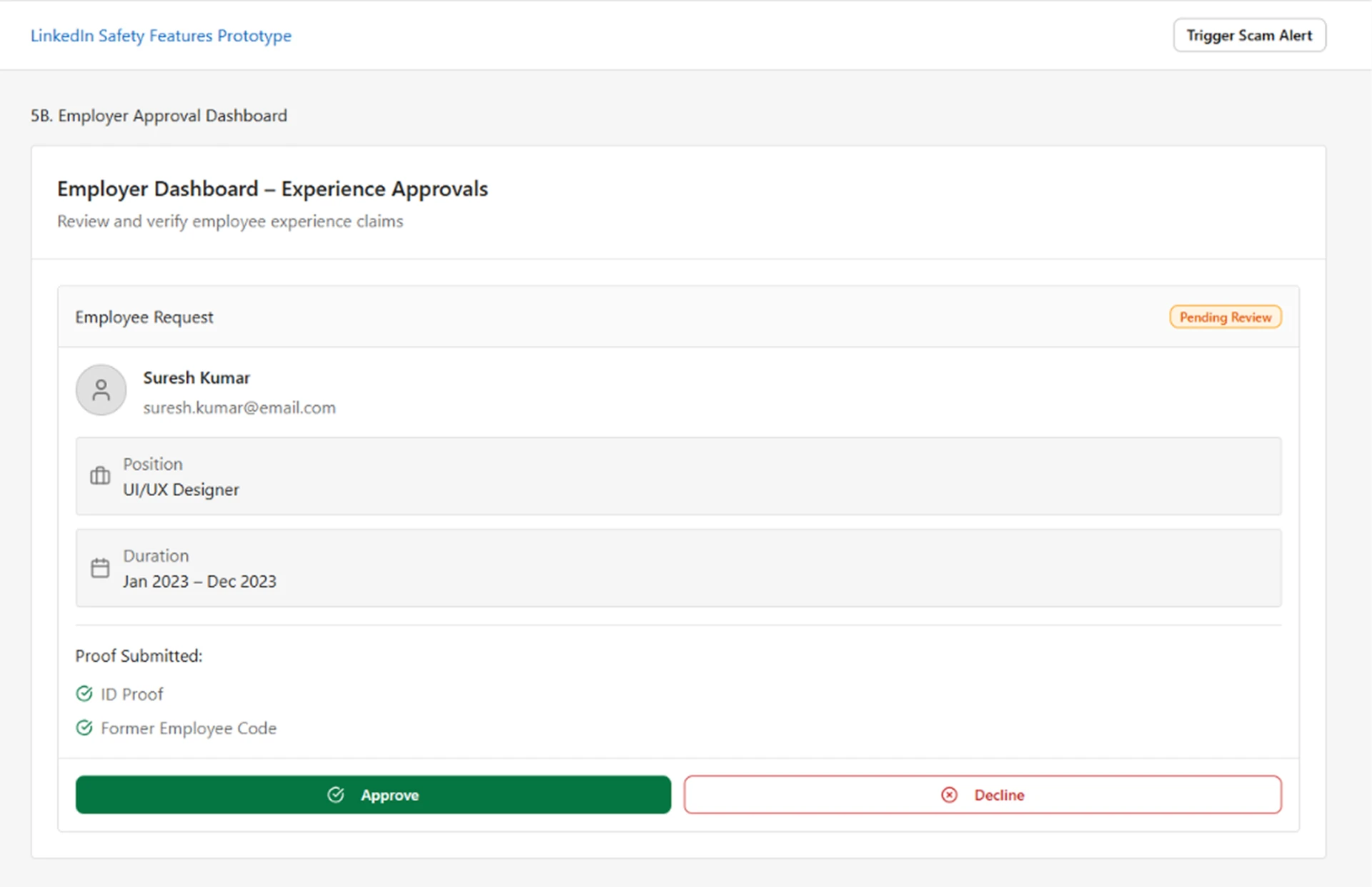
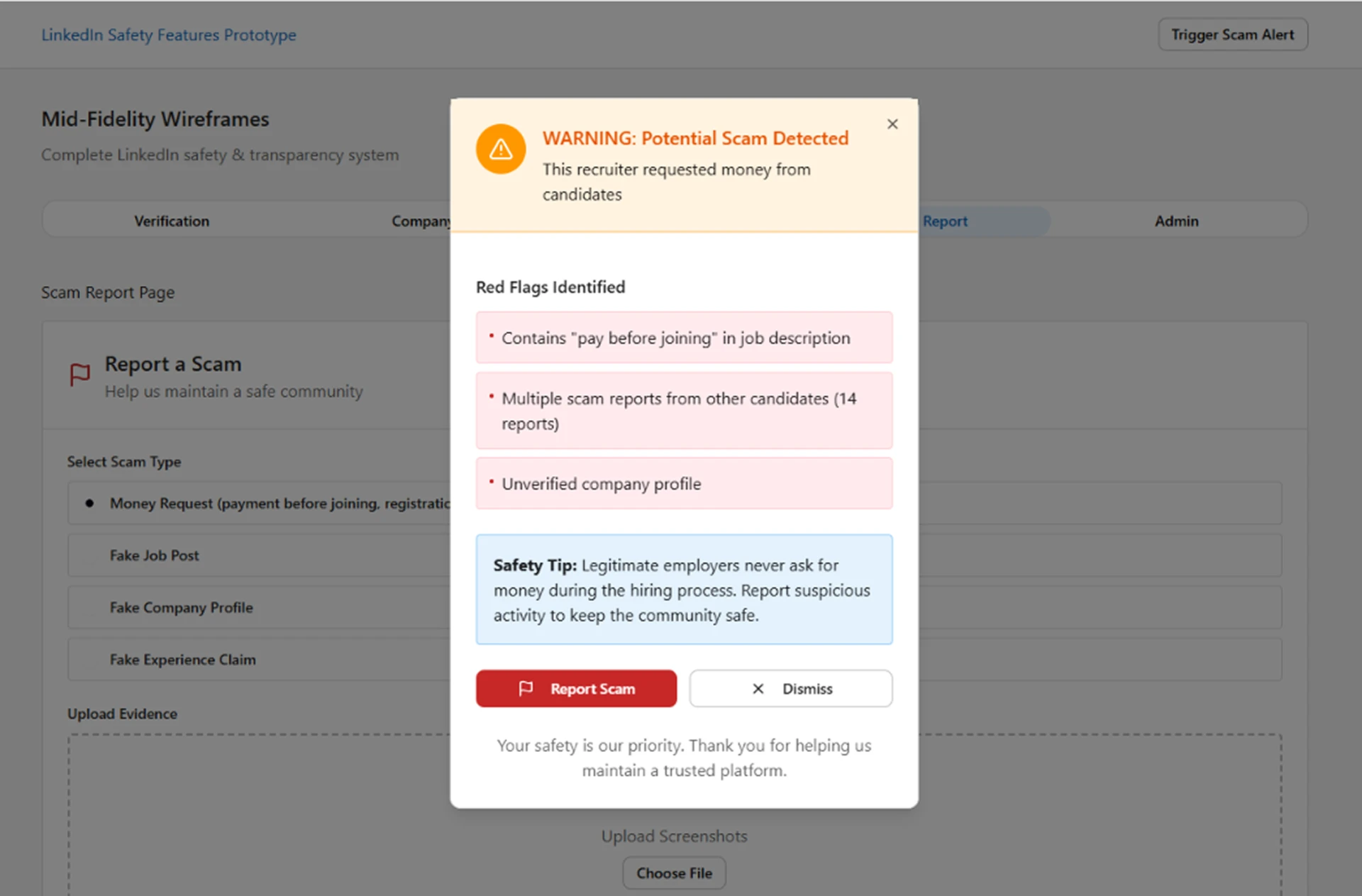
Trust signals only work when they are consistent
The components share one verification grammar — the same badge, the same score treatment, the same warning hierarchy across profile, company and post surfaces, so the signal stays readable wherever it appears.
Assumptions, clearly labelled
The following figures are projections used to frame the business case for the concept. The solution was not deployed, so none of these are measured product performance.
- +250%
verified profiles
Projected - +180%
trust score adoption
Projected - +65%
engagement
Projected - +120%
premium conversions
Projected - −70%
fraud reports
Projected - −85%
fake postings
Projected - −60%
complaints
Projected - −45%
account suspensions
Projected
Projected / expected impact — assumptions, not measured results.
Safety design is decision support
The valuable output was not the badge. It was deciding where in the journey a person is most vulnerable, and making the evidence available exactly there.
Get the full case study
The detailed version includes the research, decisions and design work behind this project.